What the panel lets you check, and what it does not
Neuromind Side Effects and Who Should Check First
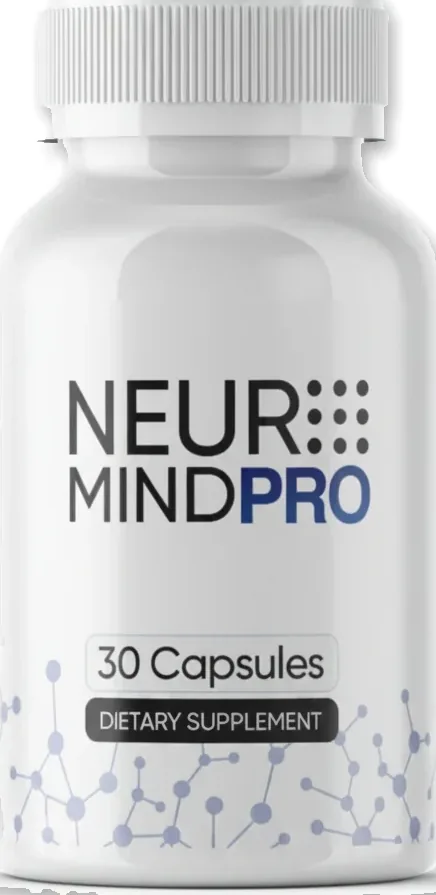
Neuromind contains three stimulants, so its main cautions are the usual caffeine ones.
Too much caffeine can bring a faster heartbeat, higher blood pressure and broken sleep. Huperzine-A is worth raising with a doctor, rhodiola has a reported losartan interaction, and B6 is 8.5 mg against a 100 mg upper limit.
If you take any prescription or have a medical condition, the label asks you to consult a physician first. See who it suits.
Does Neuromind have side effects?
No side effect list is published for this product, and no study of the finished formula exists to draw one from. So this page prints no frequencies, no percentages and no list of reported reactions. There is nothing honest to base them on.
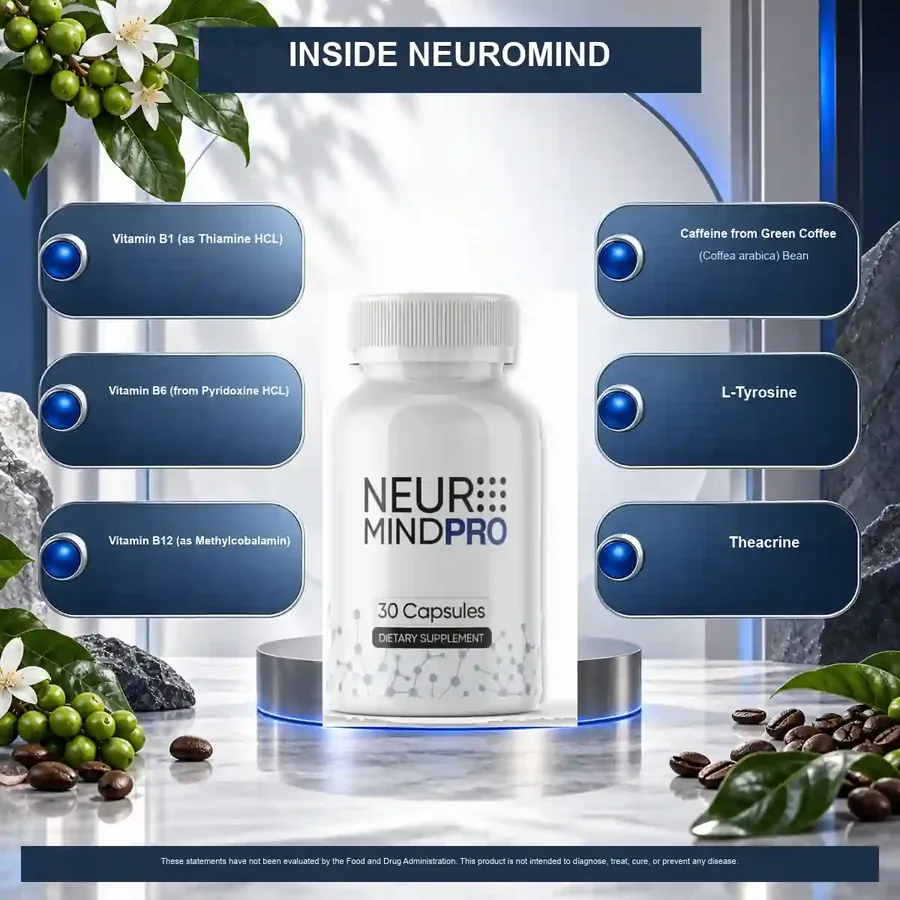
What can be done is go through the printed panel ingredient by ingredient and set out what is known, where that knowledge comes from, and what it means for you. The label hides seven amounts inside one 151 mg blend, and hidden amounts make a careful read more necessary, not less.
Three stimulants in one capsule, and none of them measured
Caffeine from green coffee, theobromine and theacrine all sit inside the single 151 mg proprietary blend. The panel names them and prints no milligram figure for any of them. That one fact drives most of this page.
The consequence is simple. The FDA points to 400 mg of caffeine a day for healthy adults, and lists a faster heartbeat, palpitations, higher blood pressure and broken sleep among the signs of too much (FDA). To use that figure you have to add up your day. With this capsule in it, you cannot.
Your day’s caffeine, with an unknown on top
The label prints one number for the whole blend: 151 mg. It never says how much of that is caffeine, so no honest page can give you a figure for the capsule. What you can count is everything else you drink. Set your usual day and see how much room is left before the FDA’s 400 mg reference point for healthy adults.
The striped part of the bar is the capsule. It is drawn as a range because a range is all the label supports. Nothing here estimates how the 151 mg splits, and no page on this site does either. Drink figures are typical published values, not measurements of what is in your cup.
The sliders count only what is printed on a coffee bag or a can. The striped part is the capsule, drawn as a range from nothing to the whole blend, because that is the only honest shape for it. Theobromine and theacrine share the same 151 mg.
Which ingredients should you check before you start?
Six of them, for six reasons. Two rows matter most: huperzia and rhodiola.
| Ingredient on the panel | What is actually known | What to do about it |
|---|---|---|
| Caffeine from green coffee | A stimulant, listed first in the blend, which by labeling rule means it is the heaviest of the seven. The amount is not published (FDA on caffeine). | Count the coffee and tea you already drink, and treat this capsule as an unknown extra on top. |
| Theobromine | The mild stimulant in cocoa, from the same methylxanthine family as caffeine. No amount is published for it either. | Read this as a stimulant blend, not as one stimulant with two spectators. |
| Theacrine | A caffeine relative with thin human research. One pharmacokinetic study found caffeine raised blood levels of theacrine, so the two are not simply additive (He et al., 2017). | Another reason a day's stimulant total cannot be worked out. |
| Huperzia serrata, 1% huperzine-A | Huperzine-A is a cholinesterase inhibitor, the same mechanism as some prescription dementia medicines, and it has been studied as a drug rather than as a food (Yang et al., 2013). | Name this one to a doctor or pharmacist, especially alongside prescription medicines. |
| Rhodiola rosea root | NCCIH says there is not enough reliable evidence to say rhodiola is useful for any health purpose, and notes reports of an interaction with losartan (NCCIH). | If you take losartan, raise it with your prescriber before you start. |
| Vitamin B6, 8.5 mg | The one amount on this label with a real ceiling behind it. The adult upper limit is 100 mg a day and this label sits at 8.5 mg (NIH ODS). | Add up the B6 across everything you take, not just this bottle. |
Huperzine-A matters most of the six, whatever its place in the blend order. It is a cholinesterase inhibitor, the same mechanism a class of prescription medicine uses, and it has mostly been researched as a drug rather than as a food (Yang et al., 2013). That is not a reason to panic. It is a reason to name it to your doctor before the first capsule rather than after the thirtieth. The ingredients page takes all ten one at a time.
What about the vitamins? The B6 question
The three vitamins are the part of this label that behaves well. B1 is 6 mg, B6 is 8.5 mg and B12 is 24 mcg, all printed and all checkable. B6 is the one with a real ceiling, and 8.5 mg sits well under it.
The adult upper limit for B6 is 100 mg a day, and very high intakes over long periods have been linked to nerve damage (NIH Office of Dietary Supplements). At 8.5 mg, one capsule is not the problem. The only question is what else you take, because B6 turns up in B-complex tablets and energy formulas too.
- B6 here8.5 mgPrinted on the panel
- Adult upper limit100 mg a dayNIH Office of Dietary Supplements
- The real questionWhat else?B-complex and energy products carry B6 too
- Blend ingredientsSevenNo amount published for any of them
Will Neuromind affect your sleep?
It might, and the timing is the part you control. Caffeine has a half-life of roughly five hours in most healthy adults, so an afternoon capsule can still be working at bedtime. Adults need 7 or more hours of sleep a night (CDC), and short sleep costs more attention than any capsule is likely to return.
That is why morning is the sensible default, which the how to take it page sets out in detail. If your sleep changes after you start and does not settle, the capsule is the obvious thing to change.
Who should not take Neuromind?
The label answers this in two places, and both answers are absolute rather than advisory.
- Anyone under 18. The label says so directly.
- Anyone pregnant or nursing. The label says that directly too.
- Anyone told by a doctor to avoid caffeine or other stimulants.
- Anyone who wants to know exactly how much caffeine they take in a day, because this label cannot provide that number.
Here is the label's own caution in full, as it appears on the bottle.
Two parts are worth pulling out. The instruction to consult a physician before use covers the huperzine and rhodiola questions above. The last sentence, that these statements have not been evaluated by the FDA and the product is not intended to diagnose, treat, cure or prevent any disease, applies to everything on this website too.
When should you stop taking it?
Whenever you want to, and certainly if any of the following turn up. There is no tapering instruction on the label.
- A racing, thumping or irregular heartbeat.
- Sleep that gets worse after you start and stays worse.
- Headache, jitteriness or nausea that does not settle in the first few days.
- Anything new that arrives with the capsule and leaves when you stop it.
Several of those overlap with the FDA's signs of too much caffeine, which is unsurprising with three stimulants in one capsule. Stopping is the cleanest test you have.
One more thing, and it is the most important sentence here. Memory or concentration trouble that worries you belongs with a doctor, not with a supplement. There are causes worth looking for, including sleep, medication effects, thyroid and mood, and a capsule addresses none of them. The who it is for page lists the groups who should check first. Order questions go to the desk on +1 (877) 257-0710.
Neuromind safety: common questions
What are the side effects of Neuromind?
None are published, and no study of this finished formula exists, so this site lists none. What can be said is what is known about the individual ingredients on the panel, which is what this page sets out.
How much caffeine is in one capsule?
Not published. Caffeine sits inside the 151 mg proprietary blend along with six other ingredients, and the label prints no split. The only hard limit is that no single ingredient can weigh more than the blend.
Can I drink coffee while taking it?
That is your call, and the honest problem is that you cannot total your day. The FDA points to 400 mg of caffeine a day for healthy adults, and one part of that sum is missing here.
Does it interact with blood pressure medicine?
NCCIH notes reports of an interaction between rhodiola and losartan. If you take losartan, or any prescription medicine, ask your prescriber before you start.
Will it keep me awake?
It can, if taken late. Caffeine has a half-life of roughly five hours in most healthy adults, so an afternoon capsule may still be working at bedtime.
Sources for this page
- U.S. Food and Drug Administration. Spilling the Beans: How Much Caffeine is Too Much? Source
- Yang G, Wang Y, Tian J, Liu JP. Huperzine A for Alzheimer's disease: a systematic review and meta-analysis of randomized clinical trials. PLoS One, 2013. Source
- National Center for Complementary and Integrative Health. Rhodiola: Usefulness and Safety. Source
- NIH Office of Dietary Supplements. Vitamin B6: Fact Sheet for Consumers. Source
- Centers for Disease Control and Prevention. About Sleep. Source
- He H, Ma D, Crone LB, et al. Assessment of the Drug-Drug Interaction Potential Between Theacrine and Caffeine in Humans. J Caffeine Res, 2017. Source
Keep reading
Ready when you are
Order Neuromind from the U.S. retail desk
One capsule a day. Follow the label on your bottle. 60-day money-back guarantee. A real person at +1 (877) 257-0710 for orders, tracking and refunds.